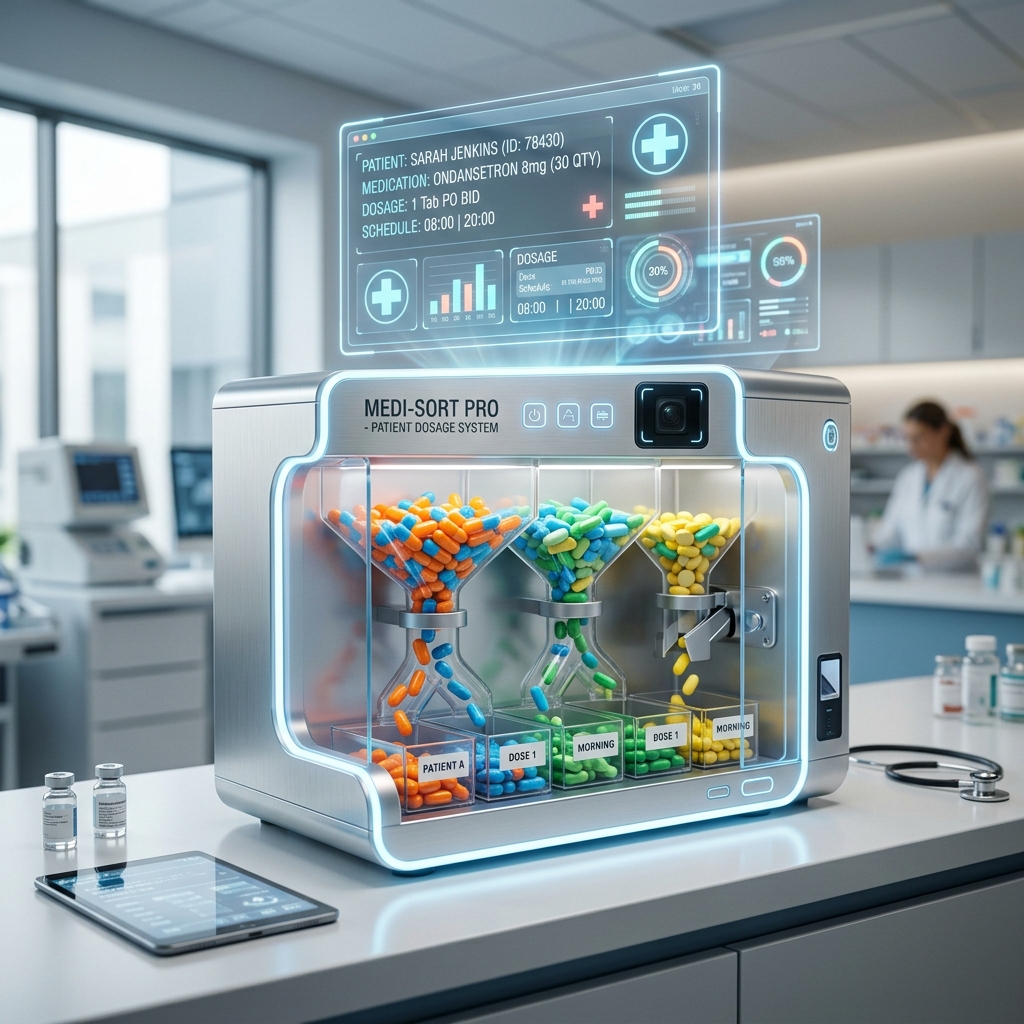
The healthcare industry is undergoing a massive transformation, driven largely by the integration of Artificial Intelligence (AI). While AI applications span everything from diagnostic imaging to predictive analytics, one of the most impactful, yet often overlooked, areas is medication management. Ensuring that patients take the right medication, at the right time, and in the right dosage is a complex challenge. Today, AI is stepping up to solve this puzzle, promising a future of enhanced patient safety, improved adherence, and reduced healthcare costs.
In this comprehensive guide, we will explore the profound
impact of AI on medication management, how smart systems like AI-powered
medicine dispensers are changing the game, and what the future holds for
patients and healthcare providers alike.
The Challenge of Medication Management
Before understanding the solution, we must recognize the
scale of the problem. Medication non-adherence when patients fail to take their
medications as prescribed is a global healthcare crisis.
According to the World Health Organization (WHO), adherence
to long-term therapies in developed nations averages only 50%. This seemingly
simple failure leads to severe consequences:
- Deteriorating
Health Outcomes: Chronic conditions like diabetes, hypertension,
and heart disease worsen without consistent medication.
- Increased
Hospitalizations: Non-adherence is a leading cause of preventable
hospital readmissions.
- Economic
Burden: In the United States alone, medication non-adherence
costs the healthcare system hundreds of billions of dollars annually.
Furthermore, medication errors (wrong drug, wrong dose, or
adverse drug interactions) pose a significant threat to patient safety. The
traditional methods of managing medications—pillboxes, manual logs, and
reliance on memory—are simply no longer sufficient in an increasingly complex
medical landscape.
Enter Artificial Intelligence: A Paradigm Shift
Artificial Intelligence, particularly Machine Learning (ML)
and Natural Language Processing (NLP), brings a level of precision, automation,
and predictive capability previously unimaginable in medication management.
Here is how AI is revolutionizing the field:
1. Smart AI-Powered Medicine Dispensers
The cornerstone of modern medication management is the
AI-powered medicine dispenser. These are not your grandparents' plastic pill
organizers. These sophisticated devices leverage AI to ensure complete accuracy
and adherence.
How They Work:
- Automated
Sorting and Dispensing: AI systems can accurately sort complex
regimens and dispense the exact required dosage at precise times.
- Biometric
Security: Many advanced dispensers use facial recognition or
fingerprint scanning to ensure that only the authorized patient receives
the medication, preventing accidental ingestion by children or
unauthorized individuals.
- Real-Time
Monitoring and Alerts: If a patient misses a dose, the smart
dispenser can send immediate alerts via mobile apps to the patient, their
caregivers, and their healthcare providers.
These intelligent systems transform a passive process into
an active, monitored healthcare intervention, drastically reducing the risk of
missed or double doses.
2. Predictive Analytics for Patient Adherence
AI excels at analyzing massive datasets to identify
patterns. In the context of medication, AI algorithms can analyze a patient's
historical data, demographics, lifestyle factors, and even social determinants
of health to predict their likelihood of non-adherence.
By identifying high-risk patients before they
miss their medications, healthcare providers can proactively intervene. This
might involve scheduling a telehealth consultation, adjusting the medication
regimen, or providing targeted educational resources. This shift from reactive
to proactive care is a hallmark of AI in healthcare.
3. Preventing Adverse Drug Events (ADEs)
Adverse drug events are injuries resulting from medical
interventions related to a drug. With patients often taking multiple
medications (polypharmacy), the risk of harmful drug-drug interactions is high.
AI systems can cross-reference a patient's complete
medication list, electronic health records (EHR), and genomic data against vast
medical databases in real-time. If a physician prescribes a medication that
could negatively interact with a patient's current regimen or genetic profile,
the AI system immediately flags the risk. This acts as a crucial safety net,
catching errors that even experienced clinicians might miss.
4. Personalized Medication Regimens
We are moving away from a one-size-fits-all approach to
medicine. AI is a key driver of precision medicine, where treatments are
tailored to the individual.
By analyzing a patient's genetic makeup, metabolism rates,
and continuous health data (gathered from wearable devices), AI can help
doctors determine the optimal drug and dosage for that specific patient. This
maximizes efficacy while minimizing side effects.
5. Streamlining Pharmacy Operations
AI isn't just helping patients; it's also optimizing the
back-end of medication management. In pharmacies and hospitals, AI is used for:
- Inventory
Management: Predicting demand for specific drugs and automating
the ordering process to prevent shortages.
- Robotic
Dispensing: Using robotic arms controlled by AI to rapidly and
accurately fill prescriptions, freeing up pharmacists to focus on patient
consultation.
- Prescription
Verification: AI algorithms can verify prescriptions against
patient records, adding an extra layer of safety and efficiency.
The Impact on Caregivers and Healthcare Providers
The burden of medication management often falls heavily on
family caregivers, causing significant stress and anxiety. AI-powered systems
provide immense relief. Caregivers can monitor adherence remotely, receive
instant notifications if something goes wrong, and have peace of mind knowing
their loved ones are safe.
For healthcare providers, AI acts as a powerful assistant.
It reduces the administrative burden of tracking adherence, minimizes liability
associated with medication errors, and provides actionable insights into
patient behavior. This allows doctors and nurses to dedicate more time to
direct patient care and complex decision-making.
Addressing the Challenges and Ethical Considerations
While the benefits are undeniable, the integration of AI in
healthcare also presents challenges that must be addressed:
- Data
Privacy and Security: AI systems rely on vast amounts of
sensitive health data. Ensuring this data is encrypted, secure, and
compliant with regulations like HIPAA is paramount.
- Algorithm
Bias: If the data used to train AI algorithms is biased, the
resulting predictions and recommendations may also be biased, potentially
leading to unequal care. Continuous monitoring and diverse datasets are
required.
- The
Human Element: AI should augment, not replace, human clinicians.
The empathy, intuition, and holistic understanding provided by a human
doctor remain irreplaceable.
The Future of AI in Medication Management
The future of medication management is incredibly promising.
We can expect to see further integration with the Internet of Medical Things
(IoMT). Imagine a scenario where an AI dispenser communicates directly with a
patient's smartwatch. If the watch detects elevated blood pressure, the AI
system could automatically prompt the patient to take their prescribed
medication or alert their cardiologist.
Furthermore, the development of intelligent
ingestibles pills with microscopic sensors that transmit data once
swallowed will provide definitive proof of adherence and real-time data on how
the body is processing the drug.
Conclusion
Artificial Intelligence is no longer just a buzzword in
healthcare; it is a vital tool for saving lives and improving the quality of
care. By solving the complex puzzle of medication management, AI is reducing
hospitalizations, lowering healthcare costs, and most importantly, empowering
patients to live healthier, safer lives.
As we continue to develop and refine these technologies,
systems like AI-powered medicine dispensers will become standard components of
home healthcare, ensuring that the right patient always receives the right
medication at exactly the right time.
Ready to Experience the Future of Medication Management?
Discover how our cutting-edge AI-powered Medicine Dispenser System can ensure safety, perfect adherence, and peace of mind for you and your loved ones.