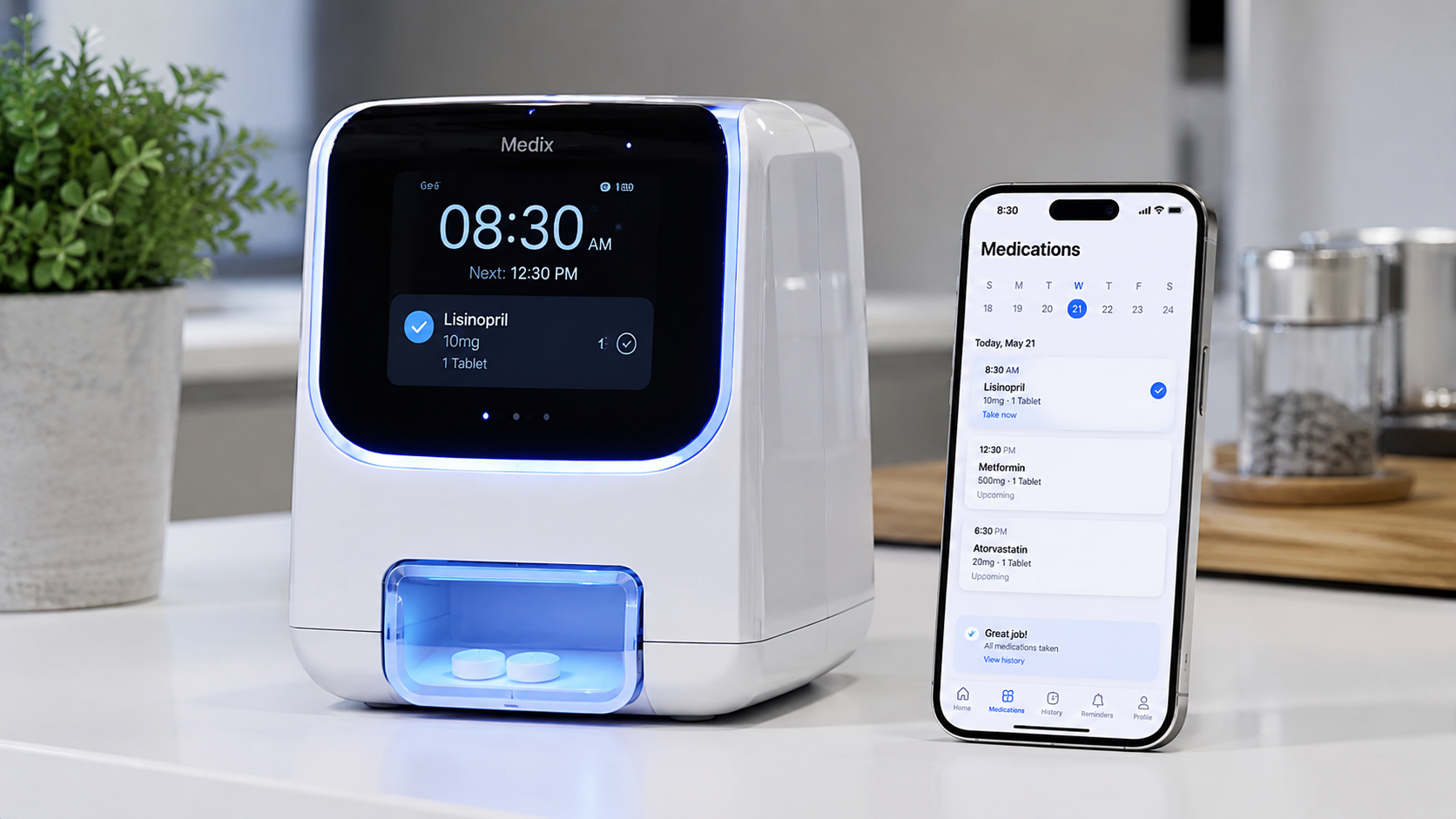
Every day, millions of people around the world forget to take their medications. It sounds like a minor inconvenience, but the consequences are anything but. Poor medication adherence is responsible for approximately 125,000 deaths annually in the United States alone and costs the healthcare system nearly $300 billion per year. Whether it's a missed blood pressure pill, a skipped insulin dose, or an antibiotic regimen abandoned too early, non-adherence silently fuels preventable hospitalizations and chronic disease complications.
The good news? Technology is stepping in — and in a big way.
Smart IoT (Internet of Things) devices are transforming how patients manage
their medications, making it easier, smarter, and more reliable than ever
before. This article explores how these connected health tools are changing the
game and why they represent the single most promising advancement in medication
management today.
What Is Medication Adherence And Why Does It Matter?
Medication adherence refers to whether patients take their
medications as prescribed by their healthcare provider — the right drug, at the
right dose, at the right time. It sounds straightforward, but research
consistently shows that nearly 50% of patients with chronic conditions do
not adhere to their prescribed medication regimens.
The reasons are varied. Some patients simply forget. Others
struggle with complex multi-drug schedules. Some experience side effects they
don't report. Elderly patients may have cognitive challenges, while those in
low-income situations might ration pills to make prescriptions last longer. For
caregivers managing medications for a family member, the burden can be
overwhelming.
The downstream effects ripple outward: worsening health
outcomes, avoidable emergency room visits, prolonged illness, increased
healthcare costs, and in serious cases — preventable death. Improving
medication adherence, even modestly, can produce significant improvements in
patient health and quality of life.
How Smart IoT Devices Are Changing the Game
The Internet of Things has quietly revolutionized industries
from manufacturing to agriculture and now healthcare is experiencing its own
IoT-driven transformation. Smart IoT devices for medication adherence work by
connecting physical devices (like pill dispensers, wearables, and sensors) to
the internet, enabling real-time data collection, remote monitoring, and
automated interventions.
Here's a closer look at the key categories of smart IoT
devices making a measurable difference:
1. Automated Smart Pill Dispensers
Perhaps the most impactful IoT health device is the automated
smart pill dispenser. Unlike a traditional pillbox, a smart dispenser is a
connected device that organizes medications in advance, dispenses the correct
dose at the correct time, and alerts both the patient and caregiver if a dose
is missed.
Modern systems like MediSync AI go even further using
artificial intelligence to learn patient habits, predict high-risk
non-adherence windows, and send personalized reminders through multiple
channels including SMS, app notifications, and even voice alerts. Some devices
feature biometric authentication to ensure the right person is accessing the
medication, while tamper-proof locking mechanisms prevent accidental or
intentional double-dosing.
For elderly patients living alone or individuals managing
five or more daily medications, these devices aren't just convenient they're
life-saving.
2. Smart Wearables and Health Monitors
Wearable devices smartwatches, fitness bands, and
biosensors are increasingly being integrated into medication adherence
ecosystems. These devices can:
- Detect
physiological signals that indicate whether a patient has taken
their medication (e.g., heart rate changes after a cardiac drug, glucose
fluctuations after insulin)
- Send
contextual reminders based on the patient's activity level, sleep
patterns, or location
- Sync
data in real-time with healthcare providers for proactive
intervention
Imagine a smartwatch that detects your typical morning
routine and automatically prompts you to take your blood pressure medication
before you leave the house. Or a biosensor patch that monitors drug levels in
your bloodstream and communicates with your doctor if adherence lapses. These
are not futuristic concepts they are available today.
3. Connected Medication Tracking Apps
Mobile health (mHealth) apps serve as the central hub for
most smart medication management systems. These applications allow patients to:
- Set up
and manage complex medication schedules
- Log
doses taken or missed with a single tap
- Receive
intelligent push notifications with personalized timing
- Share
their adherence data with doctors, pharmacists, or family caregivers
- Receive
refill alerts before prescriptions run out
The best medication tracking apps leverage AI and
machine learning to refine reminder strategies based on individual
patient behavior. If a patient consistently misses their evening dose but takes
their morning dose reliably, the app learns this and adjusts accordingly rather than sending the same generic notification that gets ignored.
4. Remote Patient Monitoring (RPM) Systems
For high-risk patients those recovering from surgery,
managing heart failure, or undergoing chemotherapy remote patient monitoring
takes IoT-powered adherence to the next level. RPM systems combine smart
devices with telehealth platforms to enable:
- Real-time
adherence tracking accessible to the entire care team
- Automated
alerts to nurses or physicians when a patient misses critical
doses
- Two-way
communication between patients and providers without requiring
office visits
- Data-driven
insights that help clinicians identify patterns and intervene
early
Hospitals and clinics using RPM systems have reported significant
reductions in 30-day readmission rates a key quality metric in
modern healthcare. For payers and providers alike, the return on investment is
compelling.
The Role of Artificial Intelligence in Medication Adherence
IoT devices collect data but it's artificial intelligence
that transforms raw data into actionable intelligence. AI algorithms embedded
in medication management platforms can:
- Predict
non-adherence before it happens, using behavioral patterns,
health metrics, and contextual cues
- Personalize
reminder timing based on individual circadian rhythms and daily
routines
- Identify
at-risk patients in a clinical population who need proactive
outreach
- Generate
adherence reports for physicians, insurers, or care coordinators
This predictive capability is a game-changer. Traditional
adherence interventions are reactive — a patient misses doses, their condition
worsens, and then a healthcare provider responds. AI-powered systems flip this
model, enabling proactive, preventive care at scale.
Real-World Impact: What the Data Says
The results from smart IoT medication adherence programs are
impressive:
- A
study published in the Journal of Medical Internet Research found
that patients using smart pill dispensers had adherence rates of
over 90%, compared to just 50–60% for patients using traditional
pillboxes.
- Patients
with hypertension using connected medication management apps showed greater
blood pressure control and fewer cardiovascular events over a
12-month period.
- Healthcare
systems deploying RPM combined with smart dispensers reported a 25–40%
reduction in preventable hospitalizations among chronic disease
patients.
- Elderly
patients using automated dispensers experienced significantly fewer medication
errors and adverse drug events.
The numbers make a compelling case not just for patients,
but for healthcare systems, insurers, and policymakers looking to reduce the
enormous financial burden of non-adherence.
Challenges and Considerations
For all their promise, smart IoT medication devices are not
without challenges. Digital literacy remains a barrier for
some elderly patients who may struggle with app interfaces or device
setup. Cost and accessibility can limit adoption, particularly
among uninsured or underinsured populations. Data privacy concerns
are legitimate health data is among the most sensitive personal information,
and patients need assurance that their data is secure and will not be misused.
Manufacturers and healthcare organizations have a
responsibility to address these barriers head-on through intuitive design,
affordable pricing models, transparent privacy policies, and inclusive
onboarding support for patients of all technological backgrounds.
What the Future Holds
The intersection of IoT, AI, and healthcare is only getting
more sophisticated. In the coming years, we can expect:
- Smart
packaging embedded with RFID sensors that track when pill bottles
are opened
- Voice-assistant
integration with platforms like Alexa and Google Assistant for
hands-free medication reminders
- Blockchain-based
prescription tracking for end-to-end transparency in the
medication supply chain
- Ingestible
biosensors — microscopic devices that confirm medication was
actually swallowed and communicate this to external monitors
As these technologies mature and become more affordable,
they will move from niche adoption to mainstream healthcare practice.
Conclusion: The Smart Path Forward
Medication non-adherence is one of the most costly and
preventable problems in modern healthcare. Smart IoT devices offer a practical,
proven, and increasingly accessible solution one that empowers patients,
eases caregiver burden, and gives healthcare providers the visibility they need
to deliver better outcomes.
The future of medication management isn't a pill it's a
connected ecosystem of intelligent devices working quietly in the background to
make sure patients get the right medication, at the right time, every time. For
individuals living with chronic illness, for aging populations seeking
independence, and for health systems straining under the weight of preventable
disease the smart revolution in medication adherence has arrived.
Now is the time to embrace it.
Ready to experience next-generation medication
management? Explore how AI-powered smart dispensers are helping patients and
caregivers stay in control because every dose matters.