Introduction: The Convergence of Connectivity and Care
The modern healthcare landscape is undergoing a massive
paradigm shift. As healthcare services transition from hospital settings
directly into patients' homes, technology must evolve to bridge the gap between
clinical supervision and self-management. One of the most significant areas of
concern in this transition is medication compliance. For decades, managing
complex drug regimens has been a manual, error-prone task left to the
responsibility of the patient or their immediate family. The consequences of error ranging
from missed doses to accidental toxicity are severe.
The Internet of Things (IoT) has emerged as a game-changer
in resolving this crisis. By embedding connectivity, sensors, and intelligent
software into physical medical devices, IoT healthcare solutions are
transforming medication management from a passive, forgettable routine into an
active, connected, and highly secure ecosystem.
"The true value of IoT in healthcare is not just in transmitting data, but in creating a proactive feedback loop that connects patients, caregivers, and medical devices in real-time."
The Core Challenges of Traditional Medication Adherence
To appreciate how IoT healthcare solutions enhance
medication management, it is essential to first understand the historical
points of failure. In clinical terms, medication non-adherence is defined as a
failure to take therapy as agreed upon with a healthcare provider. This
challenge is driven by several main factors:
- Polypharmacy
Complexity: Chronic illnesses (such as diabetes, cardiovascular
disease, and hypertension) often require patients to take multiple
medications at different times of day. Remembering which pill to take at
8:00 AM, 2:00 PM, and 8:00 PM becomes extremely difficult, especially for
elderly patients.
- Cognitive
Decline: Conditions like Alzheimer’s, dementia, or general age-related
memory issues directly impact a patient's ability to maintain a schedule.
- Lack
of Caregiver Visibility: Family members or home health aides are often
left in the dark. Without counting pills manually, they have no real-time
way of knowing whether a patient took their dose, skipped it, or took the
wrong pills.
- Accidental
Double-Dosing: Patients who forget whether they have already taken
their medication may take another dose, leading to dangerous levels of
toxicity.
How IoT Reinvents Medication Management
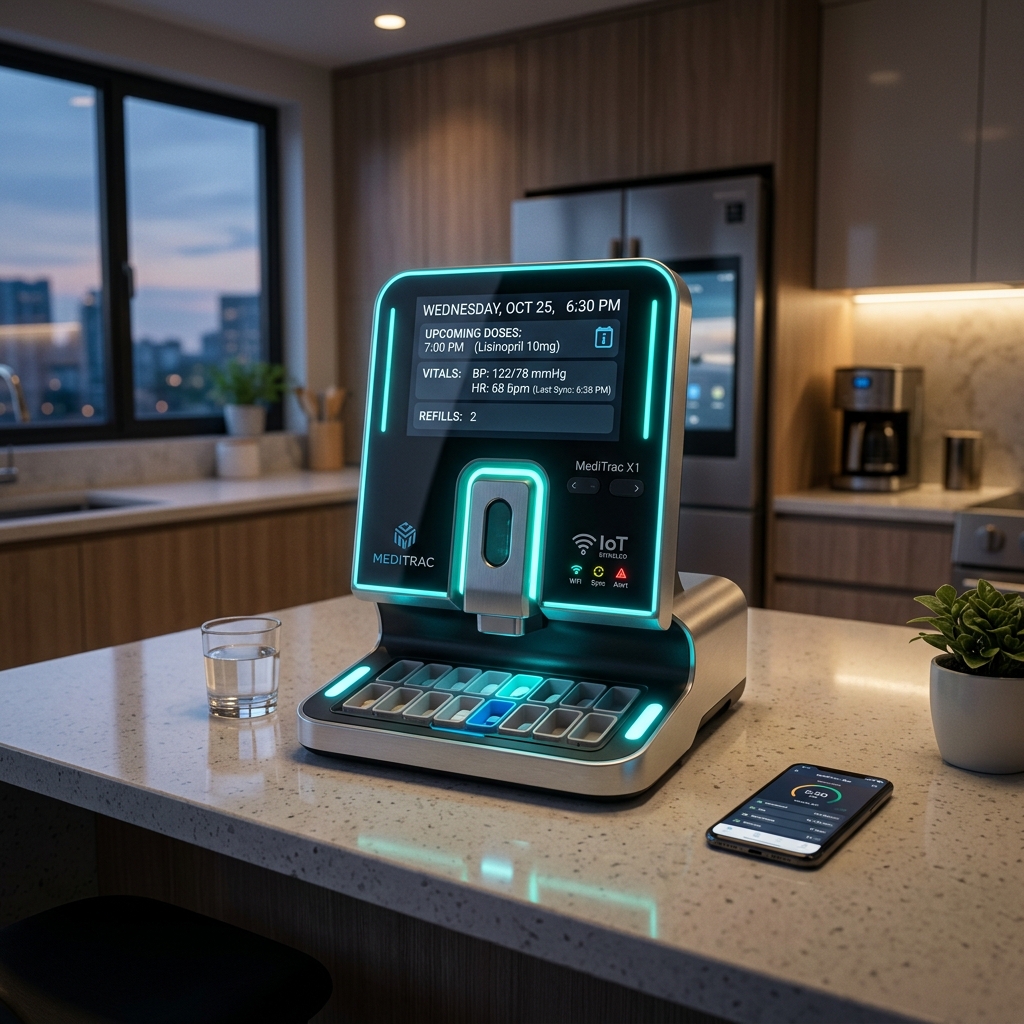
IoT-enabled devices, such as the MediSync AI smart
dispenser, solve these challenges at their roots. By replacing traditional
plastic pillboxes with connected hardware, IoT systems establish a robust,
automated workflow that handles medication tasks securely.
1. Hardware-Level Automation and Locking
Traditional pill organizers are completely open, exposing
the patient’s entire medication supply at once. IoT solutions feature secure,
motorized carousels that isolate only the scheduled dose. All other pills
remain locked behind a secure physical barrier. When it is time for a
medication, the internal motor rotates, isolates the correct compartment, and
presents the dose to the patient. This structural lock prevents double-dosing
and eliminates pill confusion entirely.
2. Multi-Sensory Alert Networks
Traditional timers or alarms can easily be dismissed or
ignored. IoT devices utilize a localized, multi-sensory notification network.
They flash highly visible LED status bars (such as cyan and teal patterns) to
catch the patient’s eye, emit customized audio tones, and display large-font
instructions on high-definition touchscreen displays.
At the same time, because the device is connected to the
internet, it sends a push notification directly to the patient's smartphone or
smart watch.
3. Remote Sensor Auditing
How does a smart dispenser know if a patient actually took
the medicine? IoT devices integrate advanced weight, optical, and motion
sensors. When a dosage compartment opens, the device uses infrared sensors to
detect whether the cup or compartment was emptied. If the system detects that
the medicine remains in the tray after a designated time, it registers a
"delayed" or "missed" dose event.
Real-Time Data Synchronization and Analytics
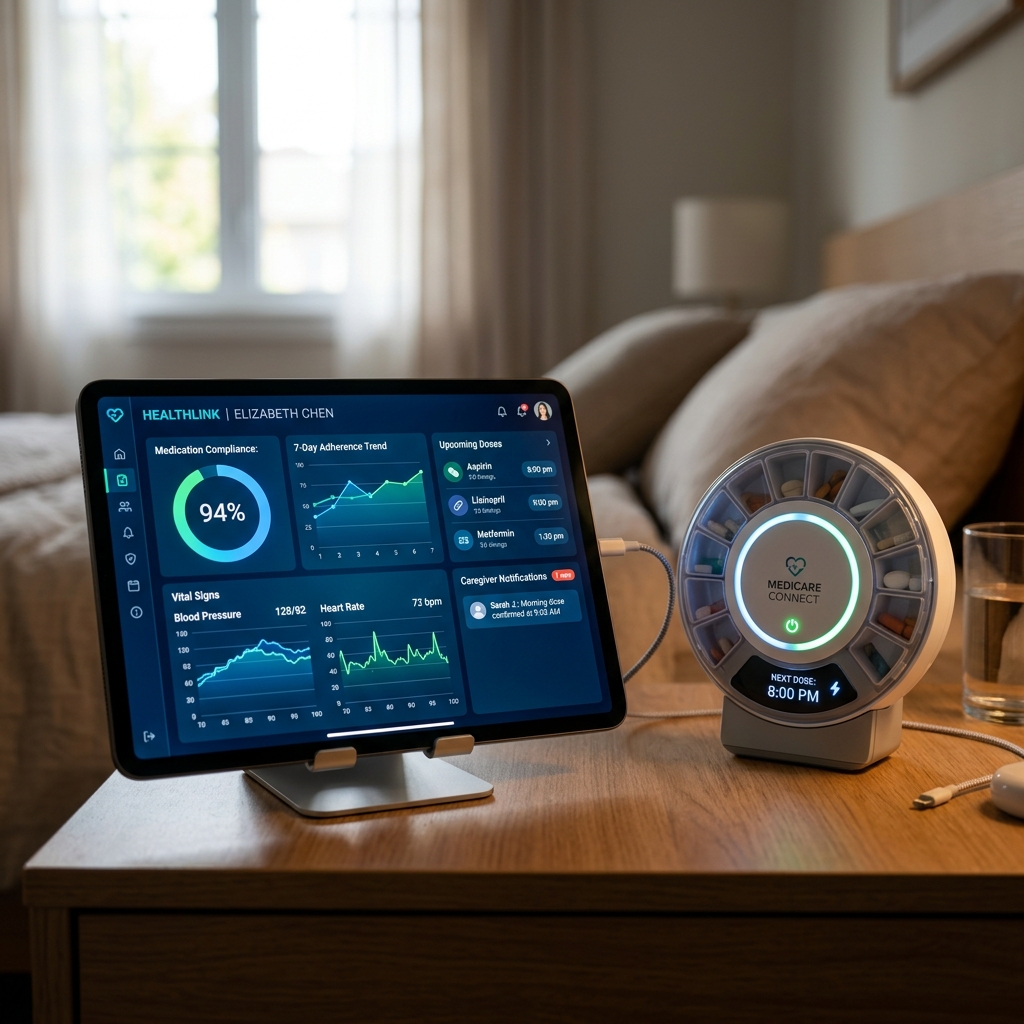
The "Internet" in IoT is what makes these systems
truly powerful. Data collected by the dispenser is sent via Wi-Fi or cellular
networks to a secure cloud platform, where it is instantly synced with
caregiver applications and medical records.
The Adherence Comparison Dashboard
Below is a comparison of how different tracking mechanisms
perform in maintaining adherence and sending alerts:
- Manual
Pillboxes: Adherence rate is around 50%. There are zero alerts, no
logs, and no remote caregiver visibility.
- Basic
Digital Timers: Adherence rate rises to 60-65%. Alerts are local-only
(beeping), logs are absent, and remote visibility is not supported.
- IoT
Smart Dispensers: Adherence rate reaches 95-98%. Alerts are local,
mobile, and remote. Logs are automatically captured in real-time, and
caregivers have full remote visibility.
Empowering Caregivers with Remote Monitoring
For family members, the anxiety of not knowing if their
parents or relatives are taking their medicine is constant. IoT medication
platforms relieve this burden by providing immediate remote visibility:
- Instant
Notifications: If a dose is missed, caregivers receive an automated
SMS, email, or app notification within minutes, allowing them to make a
quick phone call to check on their loved one.
- Refill
Warnings: IoT devices track inventory automatically by recording every
dispense event. The caregiver app displays a real-time inventory count and
sends alerts when it is time to restock.
- Compliance Reports: Compliance history is saved in a secure portal. Caregivers and doctors can view monthly statistics, identify trend patterns, and make informed adjustments to dosage schedules.
Predictive Health and Machine Learning Integration
The integration of artificial intelligence with IoT takes
medication management to the next level. By analyzing compliance data, machine
learning models can identify behavioral patterns and predict potential health
risks before they turn into emergencies.
- Behavioral
Baselines: The AI analyzes how long it takes a patient to retrieve
their pills after an alert. If a patient who normally retrieves their
pills in 5 minutes starts taking 45 minutes, the AI flags this latency as
an anomaly. This can indicate cognitive decline, physical mobility issues,
or emerging side effects.
- Dynamic
Schedule Optimization: If the AI detects that a patient consistently
takes a morning dose late, it can suggest adjusting the schedule to better
align with the patient’s natural sleep patterns, lowering friction and
improving compliance.
- Interactive
setup: Patients can chat directly with an AI assistant to configure
schedules or ask questions about medication instructions, making setup
easy and accessible.
Conclusion: A Connected Future for Healthcare
IoT healthcare solutions are no longer a luxury; they are a
critical necessity in modern medical care. By transforming the simple act of
taking a pill into an automated, monitored, and analyzed process, connected
devices prevent complications, keep patients independent, and give caregivers
absolute peace of mind.
By investing in connected IoT technology, we can move away
from reactive emergency treatments and step into a future of proactive,
home-based wellness.
🛒 Take Control of Your
Health Today
Ready to experience the ultimate peace of mind in medication
management? Get started with our connected IoT ecosystem and ensure your loved
ones never miss a dose again.
👉 CLICK HERE TO VIEW PRICING PLANS AND START YOUR 7-DAY FREE TRIAL